
There’s a certain kind of mirror moment that makes people pause.
Not a dramatic one—just that quick glance when the light hits your face a little differently than usual. Maybe it’s in the car, or near a window, or under bathroom lighting that feels strangely honest. You notice your skin texture more than you notice your features. It’s not “good” or “bad,” just… noticeable.
And that’s usually when the questions start: Is this normal? Did I do something? Is my routine helping—or making it worse?
The truth is, skin texture is something people tend to notice most over time, especially as routines become more consistent. It’s not usually about one product or one random day. It’s about the habits that quietly shape how your skin feels week after week.
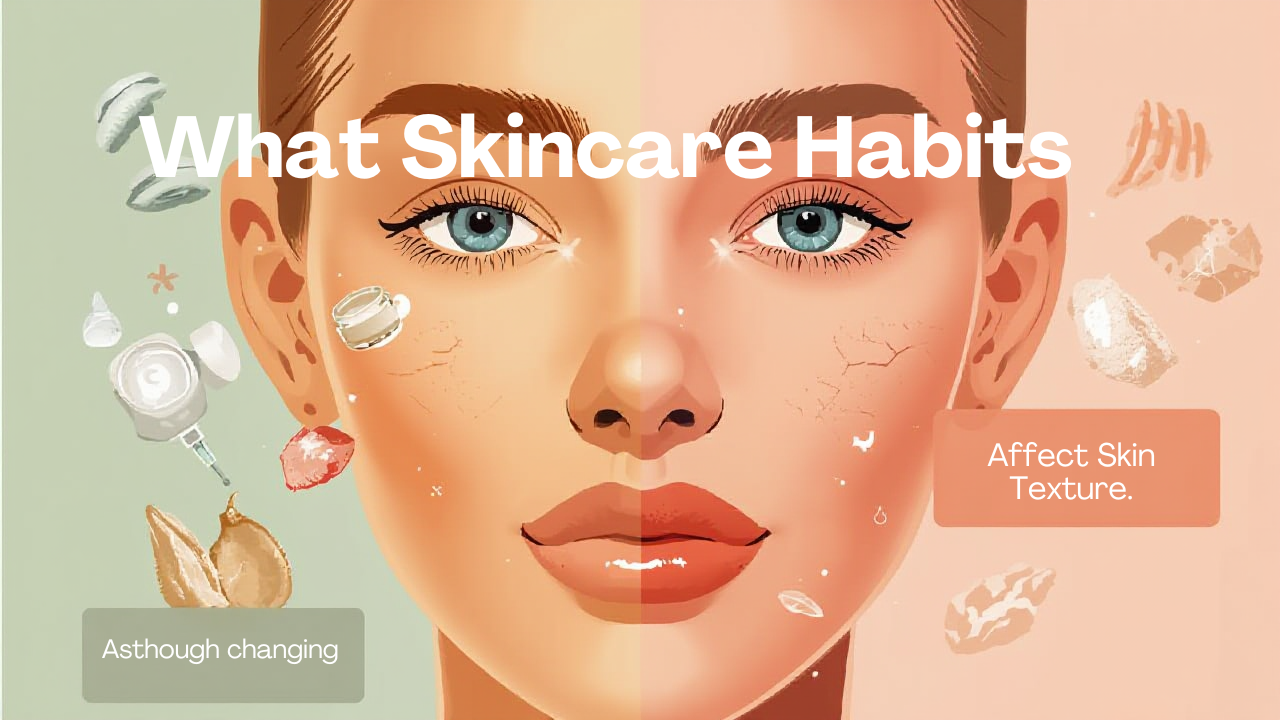
So if you’ve been wondering what skincare habits affect skin texture, this is a calm place to start.
Why skin texture feels like such a “slow” thing
Texture is one of those topics that doesn’t always show up overnight.
You can wake up and feel like your skin looks brighter or more tired, depending on sleep, stress, or weather. But texture tends to be more gradual. It shows up in patterns—like how makeup sits, how smooth your skin feels after cleansing, or how your face reacts to different seasons.
That’s why habits matter so much here.
Because texture often reflects the everyday things we repeat:
- how we cleanse
- how we moisturize
- how often we switch products
- how we treat our skin when it’s not behaving
- how gentle (or not) our routines feel
When people ask what skincare habits affect skin texture, they’re usually not asking for a quick fix. They’re trying to understand what’s shaping their skin in the background.
Habit #1: How you cleanse (and how often)
Cleansing seems simple, but it’s one of the habits that most quietly influences how skin feels.
Some people notice their texture feels more obvious when they:
- cleanse too aggressively
- use water that’s very hot
- over-cleanse because their skin feels “dirty”
- rely on cleansers that leave the skin feeling tight
On the other hand, many people notice texture feels calmer when cleansing feels gentle and consistent—like it’s removing the day without removing your comfort.
Even the way you cleanse matters:
- rushing vs. taking 30 extra seconds
- scrubbing vs. softly massaging
- cleansing once vs. twice when needed
It’s less about rules and more about noticing how your skin feels afterward.
Habit #2: Overdoing exfoliation (even when it feels satisfying)
Exfoliation is one of those steps that can feel rewarding because it gives immediate feedback. Your skin feels smoother, cleaner, more polished.
But it’s also one of the habits people tend to overdo without meaning to—especially when texture is the main concern.
Sometimes exfoliation becomes a reflex:
- texture shows up → exfoliate
- pores look visible → exfoliate
- makeup looks uneven → exfoliate
And over time, that can create a cycle where your skin feels like it needs constant intervention.
A lot of people notice that when exfoliation becomes too frequent or too intense, skin texture can start to look more noticeable—not because your skin is “worse,” but because it feels less steady.
Texture tends to respond best to routines that feel balanced rather than reactive.
Habit #3: Skipping moisturizer when skin feels “oily”
This one is incredibly common.
When people feel oily or shiny, their instinct is often to reduce anything that feels like moisture. But over time, many people notice that skipping moisturizer can make skin feel less comfortable, and texture can feel more noticeable.
Moisturizer isn’t just about looking dewy or “hydrated.” It’s often about how smooth and supported your skin feels throughout the day.
When moisturizing becomes inconsistent—especially if you’re going through a phase of trying to control shine—skin can feel a little more “uneven” in texture. Not always. Not for everyone. But it’s a pattern people frequently notice when they track their routine over time.
Habit #4: Switching products too often
There’s something so tempting about a new routine.
A new serum, a new cleanser, a new “holy grail” someone swears by. And when you’re focused on texture, it can be easy to rotate through products like you’re trying to solve a puzzle.
But skin texture often responds best to stability.
Many people notice that when they:
- add too many new products at once
- change routines every couple of weeks
- constantly try to “optimize”
their skin feels less predictable.
That doesn’t mean you can’t try new things. It just means that texture tends to reflect what happens when your routine is constantly shifting.
Consistency has a way of creating smoother, calmer patterns—not instantly, but gradually.
Habit #5: Using too many steps at once
This is one of the sneakiest habits, because it doesn’t come from carelessness—it comes from effort.
A lot of people build routines that include:
- cleanser
- toner
- essence
- serum
- exfoliant
- spot treatment
- moisturizer
- oil
- masks
And sometimes it feels great for a while. But over time, people often notice that when routines become crowded, it becomes harder to tell what’s helping and what’s simply adding noise.
Texture can start to feel like it’s constantly changing, because your skin is constantly responding to something new.
If you’ve been wondering what skincare habits affect skin texture, this is often a big one: the habit of thinking more steps always equals better results.
Sometimes the texture you’re noticing is your skin asking for simplicity.
Habit #6: Touching your face throughout the day
This habit is so human.
Leaning your hand on your cheek while working. Resting your chin while scrolling. Rubbing your forehead while thinking. Adjusting makeup. Picking at something tiny because you can feel it.
Most people don’t even notice how often they do it until they start paying attention.
Over time, many people notice their skin feels smoother when they touch their face less—not because they’re following a strict rule, but because their skin feels calmer when it isn’t constantly being interacted with.
This isn’t about guilt. It’s just an observation people often make after months of noticing patterns.
Habit #7: How you apply products (more than what you apply)
We talk so much about ingredients and not enough about technique.
Some people apply products quickly, like they’re trying to finish a task. Others press, massage, and treat it like a mini ritual.
Over time, people often notice that texture feels different depending on:
- how much they rub vs. press
- whether they apply on damp skin
- how long they wait between steps
- whether they’re pulling at their skin while applying
Small things. Quiet things. But habits like these can shape how your skin feels in a way that’s hard to notice until you’ve been consistent for a while.
Habit #8: Treating texture like a problem instead of a normal feature
This one is more emotional than practical, but it’s real.
The more you zoom in, the more you notice.
The more you compare, the more texture feels like something to fix.
But most people have texture. Skin isn’t a flat surface. It moves, changes, and catches light differently depending on the day.
Interestingly, many people notice their relationship with skin texture softens when their routines become gentler and less obsessive. Not because their texture disappears, but because it doesn’t feel so urgent.
And that shift—treating texture as something to support instead of something to fight—often changes how consistent and calm your habits become.
What people tend to notice when texture feels better over time
When people find habits that support their skin texture, they often describe it in subtle ways:
- makeup looks more even
- skin feels softer after cleansing
- the face feels calmer throughout the day
- less “roughness” in certain areas
- fewer moments of frustration at the mirror
Not perfection. Not a dramatic transformation. Just a quiet sense that things feel more steady.
That’s the kind of change that usually comes from habits—not sudden overhauls.
A calm takeaway to end on
If you’ve been thinking about what skincare habits affect skin texture, it helps to remember that texture is often a reflection of your routine’s tone.
Your skin usually responds over time to:
- consistency
- gentleness
- balance
- and how often you let it settle
You don’t need to chase flawless skin to feel good in your own. Sometimes the most reassuring progress is simply noticing that your routine feels calmer—and your skin feels easier to live with.
And that, on its own, can be a beautiful kind of improvement.
Ai Insights: Over time, many people notice that skin texture is more noticeable during periods of frequent product changes and less noticeable when their routines remain consistent and straightforward.