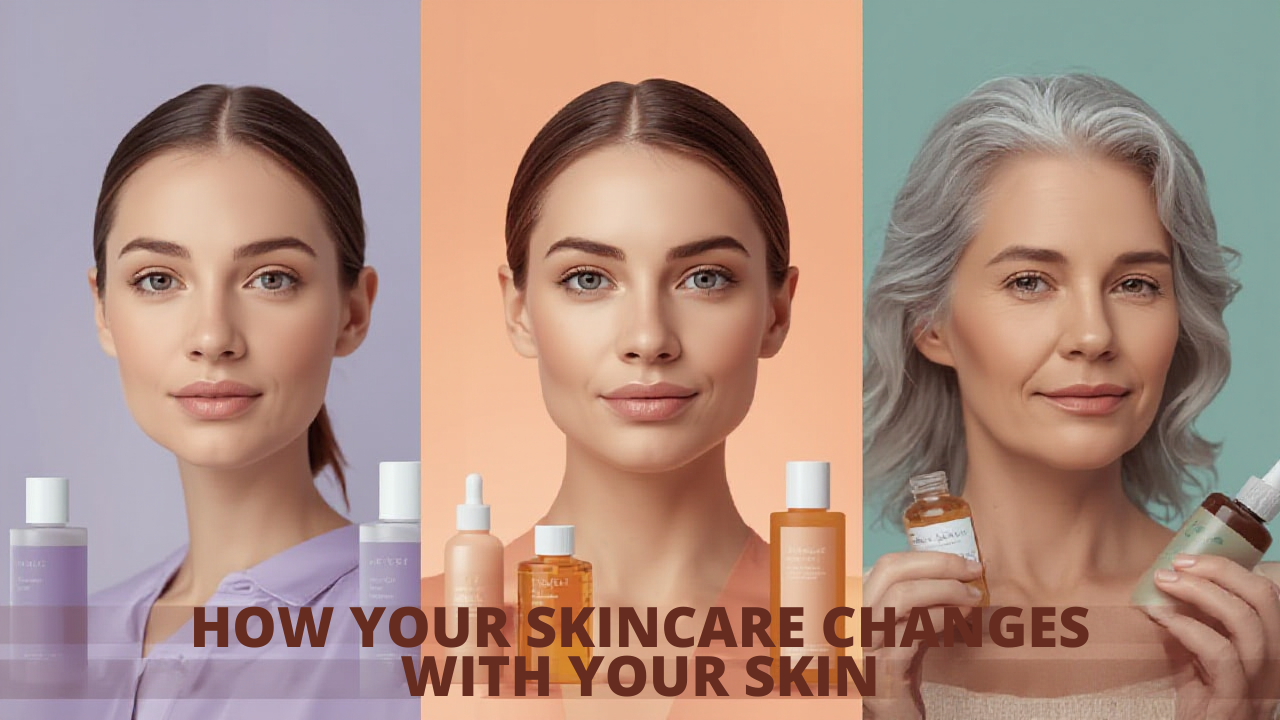

Most people don’t notice their skin changing all at once.
It’s usually subtle—like the way a sweater stops fitting the same, even though you didn’t feel yourself growing. One day you realize your face feels a little drier than it used to. Or the products you once loved suddenly feel “too much.” Or you’re doing the same routine, but the results don’t look quite the same anymore.
That’s when it becomes clear: skin evolves.
And because skin evolves, skincare routines do too.
Not in one big dramatic reset, but in small shifts that happen over seasons, years, stress cycles, and life changes. If you’ve ever wondered how skincare routines change as skin evolves, the answer is usually simple: people adjust when what used to work stops feeling right.
Skin changes for more reasons than people expect
When people think about skin changes, they often think about age. And yes, time plays a role—but skin evolves for many reasons, even within the same year.
People often notice changes because of:
- weather and seasonal shifts
- hormonal cycles
- stress and sleep patterns
- travel and different climates
- changes in diet, work, or routine
- new makeup habits
- increased sun exposure
- moving to a different city
- even changes in water quality
Sometimes the routine didn’t stop “working.” The context around your skin changed.
And that’s why routines evolve.
Not because you did something wrong—but because your skin is responding to life.
Many routines start strong, then become simpler
A common pattern: people begin their skincare journey by doing more.
They try multiple steps, experiment with ingredients, test trends, collect products, layer things carefully. It can be exciting—and it often teaches you a lot about your skin.
But over time, many people notice their routines naturally simplify.
Not because they don’t care anymore, but because they’ve learned:
- what their skin actually needs
- what products are worth repeating
- what feels unnecessary
- what makes their skin feel calm and steady
As skin evolves, people often trade “trying everything” for “trusting what works.”
The routine becomes less about exploration and more about maintenance.
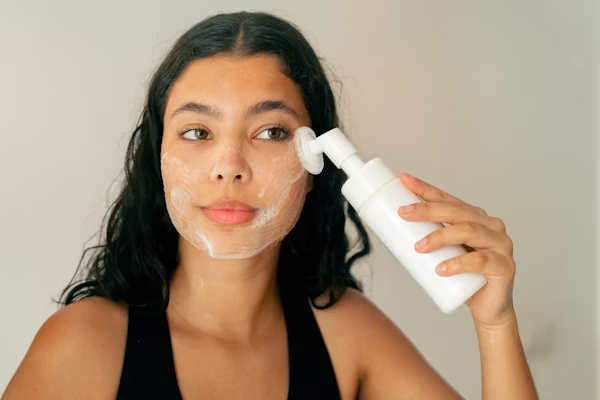
When skin becomes more sensitive, routines often get gentler
Many people notice that as their skin evolves, it becomes less tolerant of intensity.
Products that once felt fine might start to feel:
- tingly
- drying
- irritating
- overwhelming
- harder to recover from
And when that happens, routines tend to shift toward gentleness.
People often choose:
- fewer active ingredients
- more hydration-focused products
- simpler cleansers
- moisturizers that feel soothing
- longer “recovery” periods between intense steps
This isn’t a sign your skin is failing. It’s often just a sign that your skin’s needs are changing.
A routine that felt energizing in one phase might feel too harsh in another.
Dryness changes the way people build routines
One of the biggest reasons routines evolve is dryness.
Even people who used to describe their skin as oily often notice periods where their skin feels drier, especially with age, colder weather, or lifestyle shifts.
When that happens, routines often change in small ways:
- adding an extra hydration step
- switching to a creamier cleanser
- using richer moisturizers at night
- applying products on damp skin
- choosing comfort over “strong” results
Texture and dryness often feel connected, and many people notice their skin feels smoother when it feels more supported.
This doesn’t mean everyone needs a heavy routine. But it does explain why skincare routines evolve as skin does.
Oily or breakout-prone phases often lead to more minimal routines
When people go through phases of breakouts, they often do one of two things:
- Add more products to fix it
- Strip things back to calm everything down
Over time, many people notice that during breakout-prone phases, simpler routines often feel easier to manage.
Not because simple routines “solve everything,” but because they help reduce confusion.
People often prefer routines that make it clear what’s happening:
- fewer steps
- fewer new products
- fewer strong ingredients layered together
- more consistency
Skin that feels unpredictable often leads people to seek routines that feel stable.
Skincare routines evolve because people evolve too
This is one of the most overlooked reasons.
Over time, people’s lives change:
- schedules get busier
- sleep becomes more valuable
- priorities shift
- energy levels change
- budgets change
- mental space changes
And skincare routines evolve to match that.
A routine that felt fun in your early twenties may feel too complicated later. A routine that once felt “extra” may start to feel like comfort. A nighttime routine might become shorter simply because you’re tired.
Routines change not only because skin changes—but because life changes.
And people often build routines that fit the version of themselves they are now.
The best routines are often built around flexibility
As skin evolves, people often become less rigid.
They stop believing that skincare has to look the same every day. Instead, they build routines that can expand or shrink depending on how their skin feels.
For example:
- a simple baseline routine for normal days
- a more soothing routine for stressed or dry days
- a pared-back routine for sensitive phases
- a slightly more active routine when skin feels strong
Over time, people often notice that routines feel more successful when they allow room for change.
Because skin doesn’t live in one mode forever.
People also change how they judge “results”
Early on, people often judge skincare by immediate changes:
- glow
- smoothness
- quick improvements
- visible transformation
But as their skin evolves—and as they evolve—many people begin valuing different results:
- comfort
- fewer surprises
- calmer texture
- easier mornings
- fewer days where skin feels “off”
They start wanting steadiness more than intensity.
That shift in expectations often changes the whole routine.
Because the goal changes.
How people know it’s time for their routine to change
Routines usually change when people notice subtle signs.
Not necessarily something dramatic, but:
- products that used to feel good start feeling harsh
- skin feels more dry or tight after cleansing
- breakouts behave differently than before
- texture looks more noticeable
- skin feels reactive to steps that used to be easy
- the routine starts feeling “too much” to keep up with
These signals aren’t failures. They’re simply feedback.
Skin evolves. So routines evolve.
And that’s normal.
A calm takeaway to end on
If you’ve noticed your skincare routine changing over time, it doesn’t mean you’re doing something wrong.
It often means you’re paying attention.
Most people’s routines evolve as their skin evolves—through seasons, phases, and life shifts. What works beautifully in one chapter might not work the same in another.
And over time, many people realize that skincare isn’t about finding a perfect routine forever.
It’s about building a routine that can evolve with you—quietly, steadily, and kindly—one phase at a time.
Ai Insights: Over time, many people notice that the routines they once relied on often shift as their skin’s needs change, and what feels best becomes more about comfort and flexibility than intensity.