
Most people don’t figure out their skincare routine in one clean moment.
It’s usually not a dramatic before-and-after. It’s more like a slow collection of tiny realizations—things you notice in passing, patterns that repeat, products you stop reaching for, and small habits that quietly become your default.
Learning what works for your skin often looks less like “finding the perfect routine” and more like building a relationship with your skin over time.
And that relationship tends to be shaped by everyday life: weather changes, stress, sleep, hormones, travel, routines that fall apart and come back together again.
Here’s how people often describe that learning process—calmly, realistically, and without the pressure to get it “exactly right.”
The First Realization: Your Skin Has Seasons
One of the earliest things people notice is that what works in one month doesn’t always work in another.
They start realizing their skin changes with:
- Weather and humidity
- Heating and air conditioning
- Time spent outdoors
- Sleep and stress
- Diet shifts and travel
So instead of thinking “this product doesn’t work,” people often begin thinking, Maybe my skin is just in a different season right now.
That shift makes skincare feel less like a test you’re failing and more like something you’re adjusting.
People Learn by Repetition, Not by Research
A lot of people start out learning through research: ingredient lists, reviews, routines, recommendations, videos, trends.
But over time, the biggest learning comes from repetition.
People begin noticing patterns like:
- “My skin feels calmer when I keep my routine steady.”
- “I get irritated when I stack too many strong products.”
- “My skin looks better when I don’t over-cleanse.”
- “My face feels dry when I skip moisturizer for too long.”
It becomes less about collecting information and more about noticing cause and effect.
And that learning tends to stick because it’s personal evidence, not just general advice.
People Notice That Comfort Matters More Than Intensity
Early skincare routines often focus on doing the most—more steps, more actives, more “results.”
But many people eventually notice something quieter:
When their routine feels comfortable, they stick with it.
When it feels harsh or complicated, they stop.
So they start choosing based on how the routine feels:
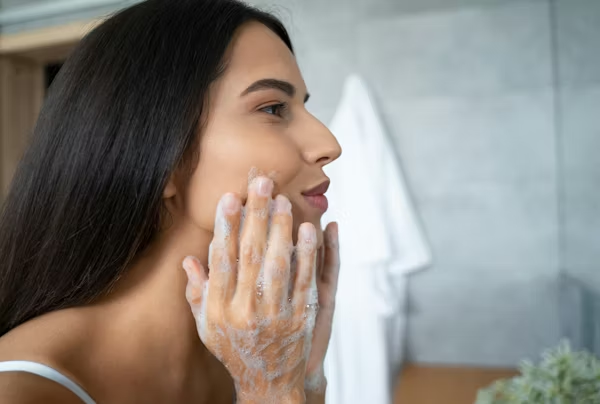
- Does my skin feel tight after cleansing?
- Does this moisturizer feel soothing or heavy?
- Does my face feel comfortable throughout the day?
- Do I dread doing this routine at night?
Comfort becomes information.
And that’s often when skincare starts feeling more sustainable.
The “Too Much” Moment Teaches People Faster Than Anything
Most people have a phase where they try too many things at once.
It’s not because they’re careless—it’s because skincare is confusing, and it’s easy to believe the answer is one more product.
But then there’s often a moment where their skin feels overwhelmed: dryness, irritation, random bumps, sensitivity, or just a feeling of “my skin is tired.”
And that moment teaches something important:
More isn’t always better.
Sometimes, the routine needs space.
People often look back and realize the “too much” moment was a turning point. It helps them recognize their skin’s limits.
People Learn What Works by Noticing What They Finish
This is such a real-life pattern: people learn what works by noticing what they naturally stick with.
A product might be “good,” but if they never finish it, it might not be right for them.
Over time, people start noticing:
- Which cleanser they repurchase without thinking
- Which moisturizer they reach for even when they’re tired
- Which sunscreen feels easy enough to wear daily
- Which products sit untouched because they don’t enjoy them
Finishing a product becomes a signal that it fits into their life.
And that’s often what “works” really means: it’s supportive and repeatable.
Skin Feedback Becomes Easier to Read Over Time
At first, skin feedback can feel confusing. A breakout could be stress, food, hormones, weather, a new product, or something random.
But over time, people notice their skin becomes more readable when their routine is stable.
With fewer variables, they can start identifying patterns:
- “This happens when I use too many exfoliating steps.”
- “This area gets dry when the weather changes.”
- “My skin feels calmer when I stick to basics.”
The routine becomes a baseline, and the skin becomes easier to interpret.
It doesn’t mean you can always pinpoint the exact cause of everything—but it becomes less mysterious.
People Learn to Separate “Skin Goals” from “Skin Reality”
Another shift that happens over time: people stop expecting their skin to stay the same every day.
They start noticing that skin naturally fluctuates—even when the routine is consistent.
So instead of chasing a constant “ideal,” people begin making peace with reality:
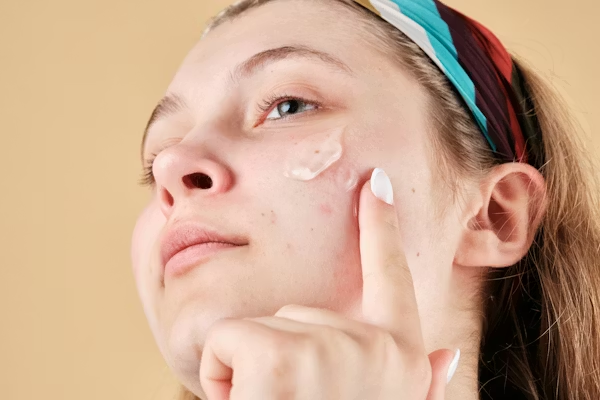
- Some texture is normal
- Pores are normal
- Occasional breakouts happen
- Skin changes with life
This doesn’t mean they stop caring. It just means their expectations become more human.
And that often makes skincare feel gentler.
What “Works” Usually Ends Up Being Simple
After all the experimenting, many people land in a similar place: a simple routine they can return to.
Not because simple is always superior—but because it’s easier to repeat, easier to understand, and easier to maintain.
For many people, what works ends up looking like:
- A cleanser that doesn’t leave skin feeling stripped
- A moisturizer that supports comfort
- A sunscreen that fits their day-to-day
- A few extra steps that feel genuinely helpful
It’s less about chasing perfection and more about building a routine that feels dependable.
A Calm Takeaway People Often Reach
Learning what works for your skin rarely feels like arriving at a final answer.
It feels like learning a language—slowly, through repetition and noticing.
Over time, many people notice that the more they listen to their skin (and the less they chase constant changes), the easier it becomes to recognize what supports them.
And that recognition becomes the real routine: not just products, but trust.
Ai Insights: Over time, many people notice that once their routine stays consistent, their skin’s responses feel easier to recognize and less like a guessing game.