
There is a brief, rhythmic stillness that occurs when a tool finally meets its purpose. It is the moment a brush moves through a knot with zero resistance, or a comb finds the exact path of a natural part. In the quiet of a morning routine, a tool feels useful not just because of what it does, but because of the physical and mental friction it removes from the day.
Utility in a hair tool is a delicate balance of ergonomics, material science, and sensory feedback. When a tool is truly useful, it stops being an object sitting on a vanity and becomes a silent partner in your preparation. It provides a sense of mastery over your own reflection, turning a series of technical tasks into a seamless and grounding ritual.
The Physical Intuition of Balance
A tool’s usefulness is first felt in the palm. There is a particular satisfaction in the weight of a handle that has been crafted to match the natural grip of the human hand. When a tool is well-balanced, it requires less force to achieve a result, allowing for a steadying influence that makes the act of styling feel controlled and calm.
This ergonomic connection is the foundation of a reliable routine. If a tool feels awkward or heavy, the routine becomes a chore; if it feels intuitive, the process moves into a state of “flow.” This physical ease is what allows the mind to rest while the hands work, ensuring that the first movements of the day are restorative rather than exhausting.
The Sensory Language of Material
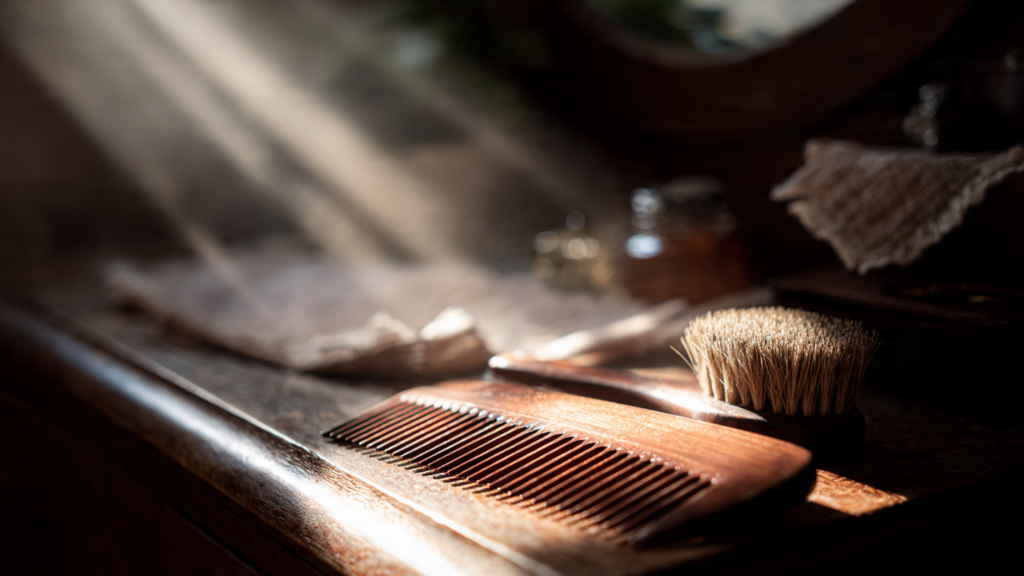
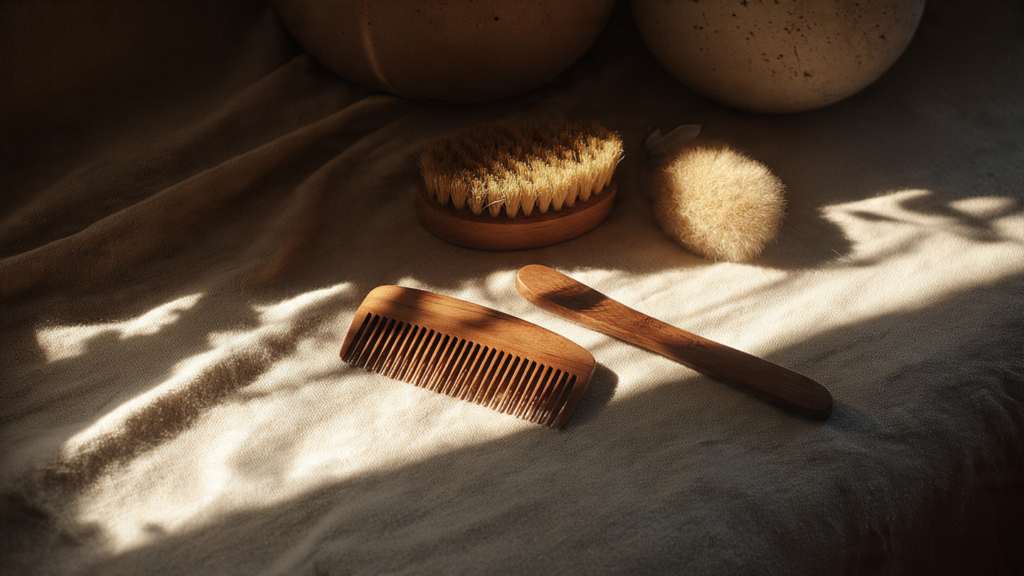
The true character of a useful tool is found in how its materials interact with the delicate architecture of the hair and scalp. Whether it is the soft geometry of a high-quality bristle or the cool, smooth surface of a wooden comb, the material dictates the final feeling of the look.
Useful tools are those that provide “soft-focus” results—they distribute natural oils and smooth the cuticle without the harsh snagging of lower-quality alternatives. This sensory feedback—the sound of the brush, the glide across the skin, and the lack of static—provides an immediate signal that the hair is being cared for, not just managed. It is a tactile luxury that rewards the user with a more consistent and healthy texture.
The Clarity of a Specific Purpose
In a world of multi-purpose promises, a tool often feels most useful when it does one specific thing exceptionally well. A wide-tooth comb is useful for its low-tension freedom; a dense brush is useful for its ability to unify a silhouette. Having a tool with a defined role provides a clear map for the morning, simplifying the mental checklist of preparation.
This clarity reduces the “decision fatigue” of getting ready. When you know exactly which tool will provide the lift or the smoothness you need, the uncertainty of the outcome disappears. This reliability builds a long-term confidence, as the tool becomes a trusted companion that delivers the same polished result every time it is lifted from its place.
Why It Matters
What makes hair tools feel useful matters because these objects are the primary architects of our daily physical comfort and self-perception. By choosing tools that feel worth our time, we are affirming the value of the quiet moments we spend preparing to meet the world.
From an editorial perspective, these objects represent the intersection of high-quality craftsmanship and personal well-being. They remind us that the best solutions are often the most tactile ones, rooted in a deep respect for the materials we touch to our skin. Investing in useful tools is a way of ensuring that our routines are supportive and sustainable, providing a steady source of poise through the changing light of the day.
The routine eventually ends, the tools are returned to their jars, and the face is left with a finish that feels light and clear. The work is done, but the feeling of being thoughtfully prepared remains. What remains is a sense of total composure—a realization that the right tools make the path to ourselves a little easier to walk.
✨ AI Insight: A tool is only as useful as the peace of mind it provides; the best instruments are the ones that make you forget you are even using them.