
There is a tactile transformation that happens the moment a tool meets the hair. It is the transition from a collection of individual strands to a unified surface that either reflects light with clarity or absorbs it into a dull, tired matte.
The tools we choose—from the spacing of a comb’s teeth to the material of a brush’s bristles—act as the primary architects of our hair’s daily texture. They do more than just arrange the hair; they physically influence the cuticle, the outer protective layer of each strand. When the right tool is used with an intentional touch, it smooths this layer, creating a texture that feels like silk and moves with a soft, pillowy substance.
The Mechanical Smoothing of the Cuticle
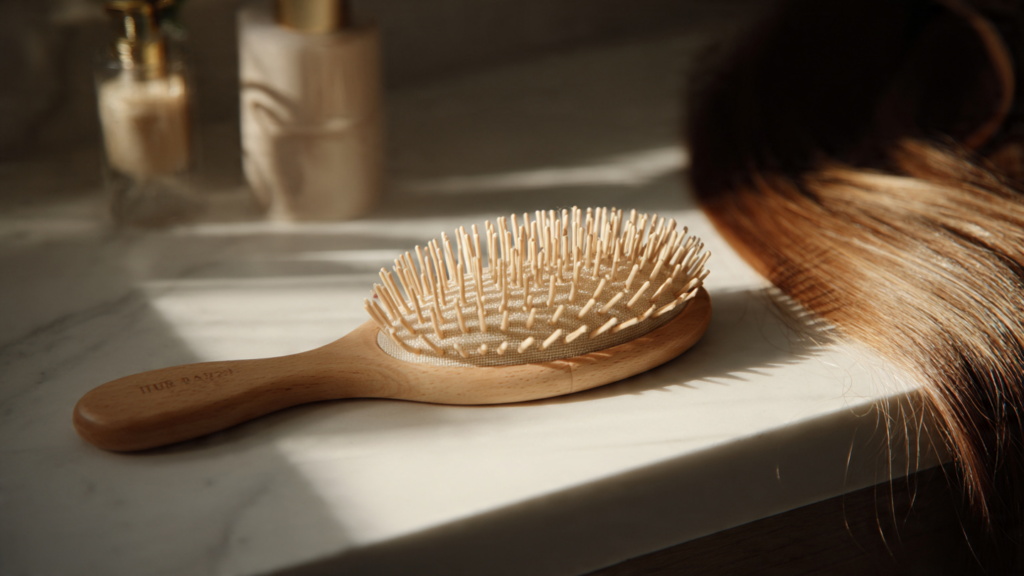
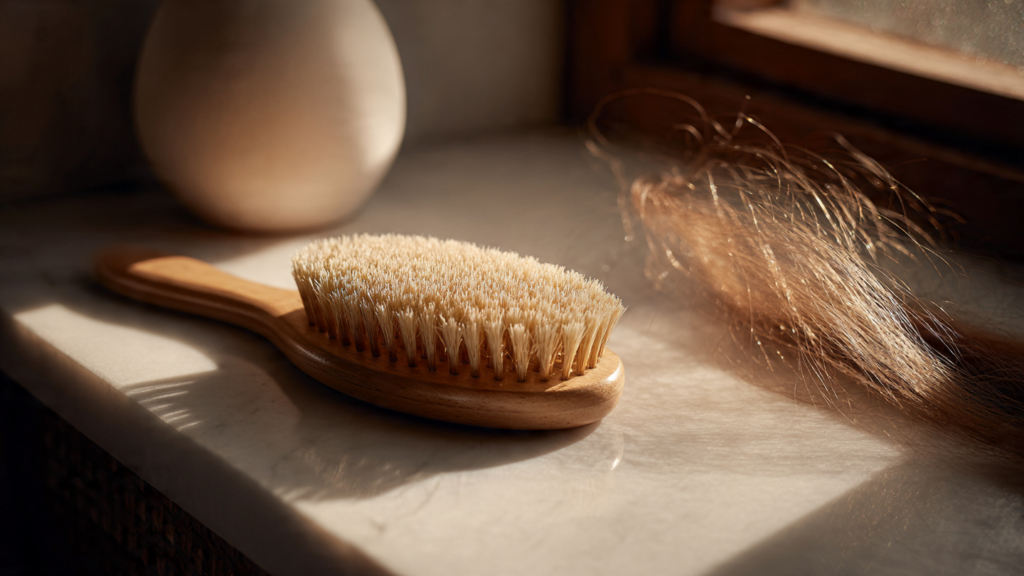
The most immediate way a tool affects texture is through the physical alignment of the hair’s external scales. A high-quality brush, particularly one with natural or soft-focus synthetic bristles, is designed to gently press the cuticle flat against the hair shaft. This smoothing action is what creates a high-definition sheen and a soft, “slip” feel to the touch.
In contrast, using tools with sharp edges or rigid, low-quality materials can snag and lift the cuticle. This results in a texture that feels “raspy” or brittle, making the hair appear more frizzy than it truly is. By choosing tools that respect the delicate architecture of the hair, we ensure that the texture remains supple and resilient, allowing it to glide past other strands without the friction that leads to tangling.
The Distribution of Natural Luminosity
One of the hidden roles of a daily tool is the movement of the scalp’s natural oils down the length of the hair. This process is the original form of texture enhancement. A brush with a dense but flexible head picks up these protective oils and redistributes them, creating a natural veil of moisture that coats every strand.
This internal hydration is what gives hair its “body” and purposeful weight. When the oils are trapped at the root, the ends feel dry and light, leading to a disconnected and uneven texture. By facilitating this distribution, the right tool unifies the hair from root to tip, resulting in a look that possesses a consistent, healthy glow. It is a slow, rhythmic habit that rewards the individual with hair that feels deeply nourished and entirely real.
The Influence of Tension and Airflow
The way a tool interacts with tension and airflow also dictates the finality of the hair’s texture. A wide-tooth comb provides a low-tension environment, allowing the hair to retain its natural wave and a “lofty,” airy feel. This is ideal for those who value a textured, lived-in look that emphasizes volume and movement.
On the other hand, tools used for blow-drying or smoothing require a specific kind of grip to stretch the hair into a sleek, glass-like finish. The danger lies in using too much tension or heat, which can deplete the hair’s internal moisture and leave the texture feeling “parched.” Mastering the use of these tools involves a delicate balance—using enough guidance to shape the hair while leaving enough moisture to ensure the texture remains soft and touchable.
Why It Matters
How tools affect hair texture matters because it is the primary factor in how we feel about our hair throughout the day. When the texture is right, the hair becomes a source of steady confidence and physical comfort. By understanding the mechanical impact of our tools, we can move away from “fixing” our hair with heavy products and toward a more sustainable, tool-focused approach.
From an editorial perspective, this focus on the physical interaction between tool and fiber highlights the craftsmanship behind a daily routine. It reminds us that the best results are born of a deep respect for the materials we use. Investing in the right tools is a way of ensuring that our hair’s texture remains a true and healthy reflection of our commitment to intentional self-care.
The routine ends, and the hair is left to settle into its final shape. The scalp feels calm, and the strands possess a unified, healthy texture that catches the light with every movement. What remains is a feeling of total composure—a realization that the most beautiful textures are always those that have been guided by a gentle and knowledgeable hand.
✨ AI Insight: A brush is not just for styling; it is a tool of translation that takes the chaotic energy of the morning and turns it into a smooth, readable story of health.