
Eye makeup routines often start with curiosity. New products, techniques, and trends invite experimentation. Over time, though, many people notice a shift. What once felt creative can begin to feel time-consuming, especially on ordinary days when the goal is simply to feel awake and put together.
Simplifying eye makeup doesn’t usually happen all at once. It happens quietly, shaped by repetition, habit, and the realization that less effort can sometimes deliver a better result.
Simplicity Begins With Editing, Not Eliminating
Most people don’t simplify eye makeup by stopping altogether. They simplify by editing.
Steps that require precision or extra time are often the first to go. Complex blending. Multiple shades that serve similar purposes. Products that look good only under perfect conditions.
What remains are the steps that consistently work. The ones that don’t need adjusting. Simplification starts by keeping what earns its place.
Brows Often Become the Foundation
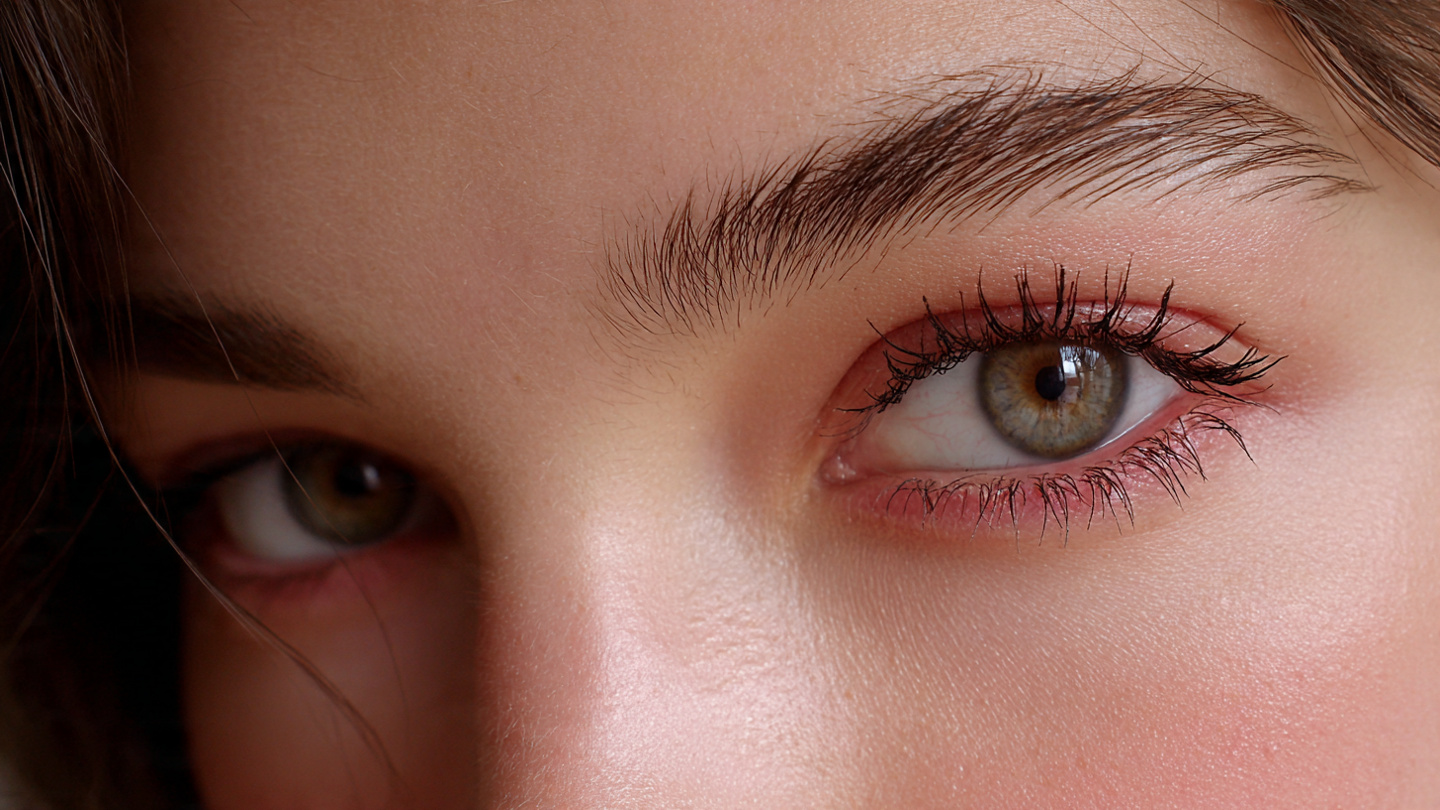
For many, brows become the anchor of a simplified eye routine. When brows are lightly groomed or softly defined, the eyes already feel framed.
This framing reduces the need for additional definition. Lashes feel more noticeable. Eyes appear clearer, even without shadow or liner.
Brows quietly take on the role of structure, allowing other steps to fall away.
One-Step Products Replace Layering
Layering multiple eye products can feel satisfying, but it’s rarely practical every day. As routines simplify, people gravitate toward products that do more than one job.
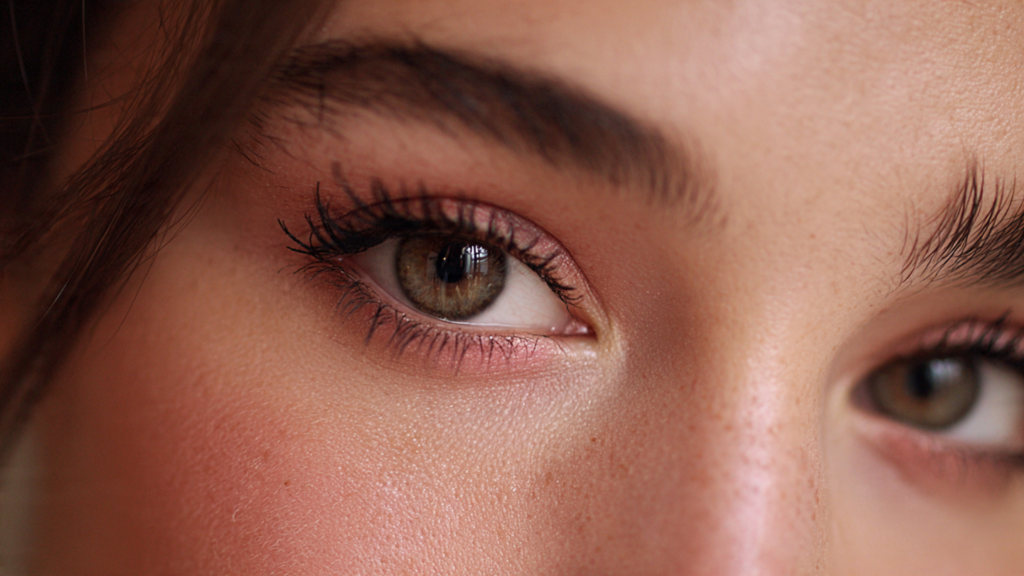
A single neutral shadow that adds depth. A soft liner that can be smudged quickly. A mascara that defines without clumping.
One-step products reduce decision-making. They also reduce the chance of overdoing things, which makes routines feel easier to trust.
Application Becomes More Intuitive
Complex eye makeup often depends on mirrors, lighting, and focus. Simplified routines rely more on instinct.
Products are applied the same way each day. Placement becomes muscle memory rather than technique. Fingers replace brushes. Quick blends replace careful gradients.
When application feels intuitive, eye makeup stops demanding attention.
Neutral Tones Tend to Stay
As routines simplify, many people settle into neutral or familiar tones. Not because bold colors aren’t appealing, but because neutrals adapt more easily.
A soft brown, taupe, or muted rose works across settings and moods. It doesn’t require balancing the rest of the face. It simply adds quiet definition.
Neutral tones reduce the need to think ahead, which is often why they remain in daily routines.
Liner Becomes Softer or Disappears
Precise eyeliner is often one of the first steps people remove when simplifying. Sharp lines require time and symmetry, which can feel demanding.
Instead, liner may become softer—smudged along the lash line, applied with shadow, or skipped entirely. Definition comes from lashes and brows instead.
This shift often makes the eyes feel more relaxed and expressive, even with less effort.
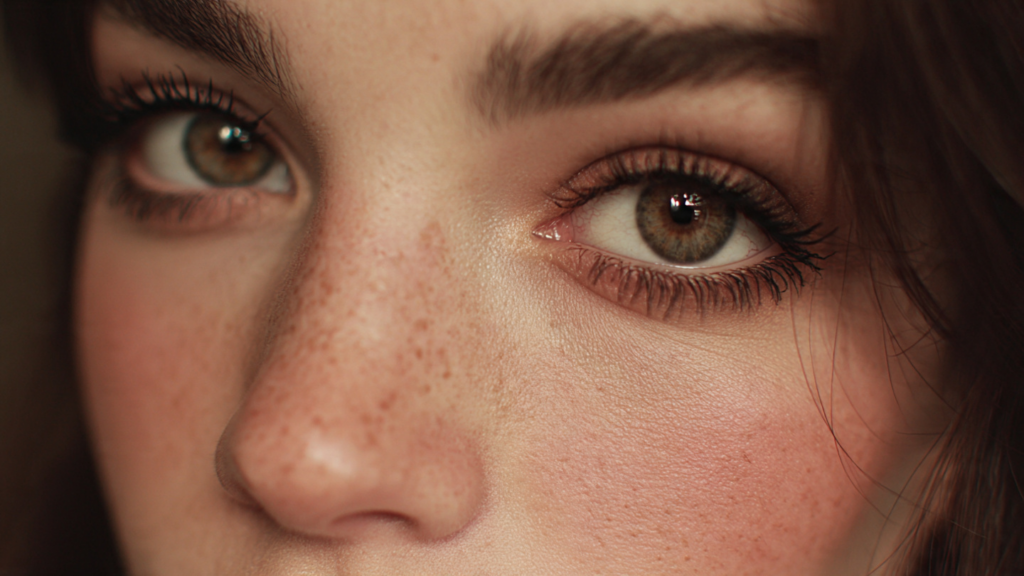
Mascara Earns Its Place Through Reliability
In simplified routines, mascara often remains because of its impact-to-effort ratio. A few swipes can change how awake and defined the eyes look.
People tend to stick with mascaras that behave predictably—no flaking, no smudging, no fuss. Reliability matters more than drama.
When mascara works without thought, it becomes one of the last steps to go.
The Goal Shifts From Impact to Ease
Early eye makeup routines often aim for impact—visible change, definition, polish. Simplified routines aim for ease.
Eyes don’t need to stand out. They need to feel open, rested, and present. Makeup supports expression rather than drawing focus to itself.
This shift changes how success is measured. If the routine feels easy, it’s working.
Mistakes Become Less Noticeable
With fewer products and softer application, mistakes matter less. A smudge blends in. Uneven placement feels intentional.
This forgiveness reduces stress. There’s less fixing, less starting over. The routine flows instead of stopping and correcting.
Simplicity creates room for imperfection.
Eye Makeup Adapts to Real Life
Simplified routines survive busy mornings, low-energy days, and changing environments. They don’t rely on perfect conditions.
Whether the day includes work, errands, or unexpected plans, the same routine works. There’s no need to adjust or add steps.
Adaptability is one of the main reasons simplified routines last.
Why It Matters
Simplifying eye makeup routines changes how people experience getting ready. Less effort means less pressure and more consistency.
When eye makeup feels manageable, it becomes something people actually do rather than something they plan to do. The routine supports the day instead of competing with it.
Simplicity allows makeup to feel like a tool, not a task.
When the Eyes Feel Clear Enough
Most people don’t mark the moment their eye routine became simpler. They notice it later, when getting ready feels faster and lighter.
The eyes look defined enough. Expression feels natural. Nothing feels missing.
A simplified eye makeup routine doesn’t aim to impress. It aims to stay.
✨ AI Insight:
Many people realize their eye makeup routine has simplified when their eyes feel finished sooner, without the sense that anything was left out.