
Some changes in skin happen so gradually they’re easy to miss. A routine feels familiar, the steps barely require thought, and skin no longer reacts sharply from one day to the next. These moments often arrive quietly, without a new product or a dramatic shift—just the steady presence of repetition.
Over time, many people realize that what changed wasn’t what they used, but how consistently they used it. The rhythm mattered more than the ingredients.
The Early Focus on Finding the “Right” Product
Most skincare journeys begin with products. A cleanser that promises clarity. A serum meant to smooth texture. A treatment designed to target breakouts or dryness. Each purchase carries hope that the next item will be the one that makes everything click.
This focus makes sense. Products are tangible, visible, and easy to change. When skin feels unpredictable, switching something feels like taking action. Over time, however, many people notice a pattern: improvement rarely comes from the newest addition alone.
Skin often responds not to novelty, but to familiarity.
How Inconsistency Keeps Skin in Motion
Skin is highly responsive. Every new product, skipped step, or sudden change asks it to adapt again. When routines shift frequently, skin rarely reaches a stable baseline.
Inconsistent use can blur cause and effect. It becomes difficult to tell whether skin is improving, adjusting, or reacting. Texture may fluctuate. Breakouts may appear unexpectedly. Even gentle products can feel disruptive when used irregularly.
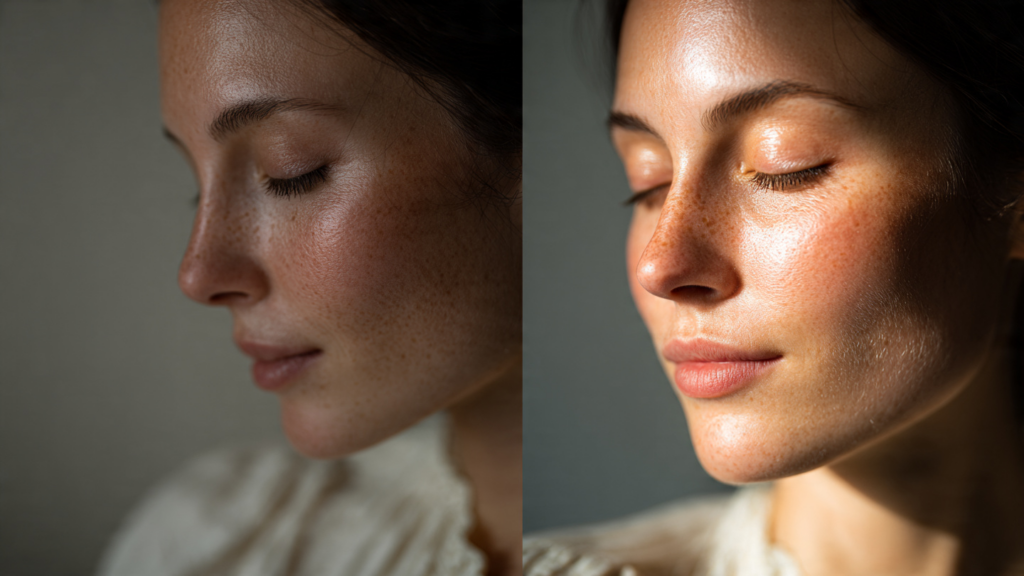
Consistency allows skin to settle. Without constant interruption, it begins to behave in more predictable ways.
Repetition Builds a Baseline
When routines are repeated regularly, skin develops a point of reference. It begins to recognize what’s coming next—how it’s cleansed, how it’s hydrated, how it’s left to recover.
This baseline doesn’t eliminate concerns, but it reduces volatility. Oil production steadies. Dryness becomes easier to manage. Texture softens gradually rather than shifting abruptly.
A consistent routine gives skin time to respond fully instead of staying in a perpetual state of adjustment.
Why Familiarity Often Feels Like Improvement
Many people notice that skin feels better not when something new is added, but when nothing changes for a while. Cleansing feels less disruptive. Moisture holds longer. Sensitivity becomes less frequent.
This sense of improvement is often the result of familiarity. Skin is no longer guessing. It’s responding within known conditions. The absence of surprise becomes a form of comfort.
In this way, consistency doesn’t create dramatic results—it creates stability, which often feels more valuable.
Products Can’t Work If They’re Interrupted
Even well-formulated products depend on time. They are designed to support skin gradually, not instantly. When routines change too often, products rarely get the chance to do what they’re meant to do.
Stopping and starting creates incomplete cycles. Skin begins to adjust, then is asked to adapt again before that process finishes. Over time, this can feel like nothing works, when the real issue is that nothing has been given enough time.
Consistency allows products to fade into the background so their effects can accumulate quietly.

Emotional Consistency Matters Too
Skincare isn’t only physical—it’s emotional. Inconsistent routines often reflect uncertainty. Doubt leads to frequent changes, which reinforces the feeling that skin is unpredictable or uncooperative.
When routines stay the same, confidence tends to follow. People stop watching their skin so closely. They trust how it usually behaves. That emotional steadiness often improves the overall experience of skincare, regardless of visible changes.
Consistency reduces the mental weight skin can carry.
Why Simple Routines Often Feel More Effective
Simple routines are easier to repeat. Fewer steps mean fewer opportunities to skip, forget, or alter something. Over time, this reliability matters more than complexity.
When routines fit naturally into daily life, they’re more likely to be maintained. Skin benefits from this steadiness far more than from occasional intensity.
Effectiveness often comes not from doing more, but from doing the same thing often enough for it to matter.
Skin Learns From Patterns, Not Promises
Marketing language focuses on outcomes. Skin responds to patterns. It reacts to how often it’s cleansed, how regularly it’s moisturized, and how consistently it’s left alone to recover.
These patterns shape how skin behaves over time. Breakouts may still happen. Texture may still change. But reactions often feel less extreme when the surrounding routine stays steady.
Consistency teaches skin what to expect, and that expectation creates calm.
When Results Become Subtle but Meaningful
Consistent routines rarely lead to overnight transformation. Instead, they change how skin feels across ordinary days. Fewer moments of tightness. Less redness after cleansing. A surface that feels more even to the touch.
These shifts are easy to overlook because they’re subtle. Yet they often matter more than dramatic changes because they persist.
Consistency doesn’t chase results—it allows them to settle in.
Why It Matters
Understanding the value of consistency changes how people approach skincare. The focus moves away from constant searching and toward maintenance.
This shift reduces pressure. Skincare becomes something supportive rather than something to solve. Skin feels less demanding, even when concerns remain.
Consistency matters because it creates a relationship with skin that’s based on trust instead of constant correction.
A Steadier Way to Think About Care
Over time, many people realize that products come and go, but routines shape experience. The same cleanser used regularly often does more than several tried briefly. The same moisturizer applied daily often feels more effective than one replaced too soon.
Consistency doesn’t mean rigidity. It means allowing enough time for skin to respond before asking it to change again.
In that space, skin often becomes calmer—not because it was fixed, but because it was allowed to settle.
✨ AI Insight:
People often recognize the value of consistency when their skin stops reacting to every small change and starts feeling familiar again, even as it continues to evolve.