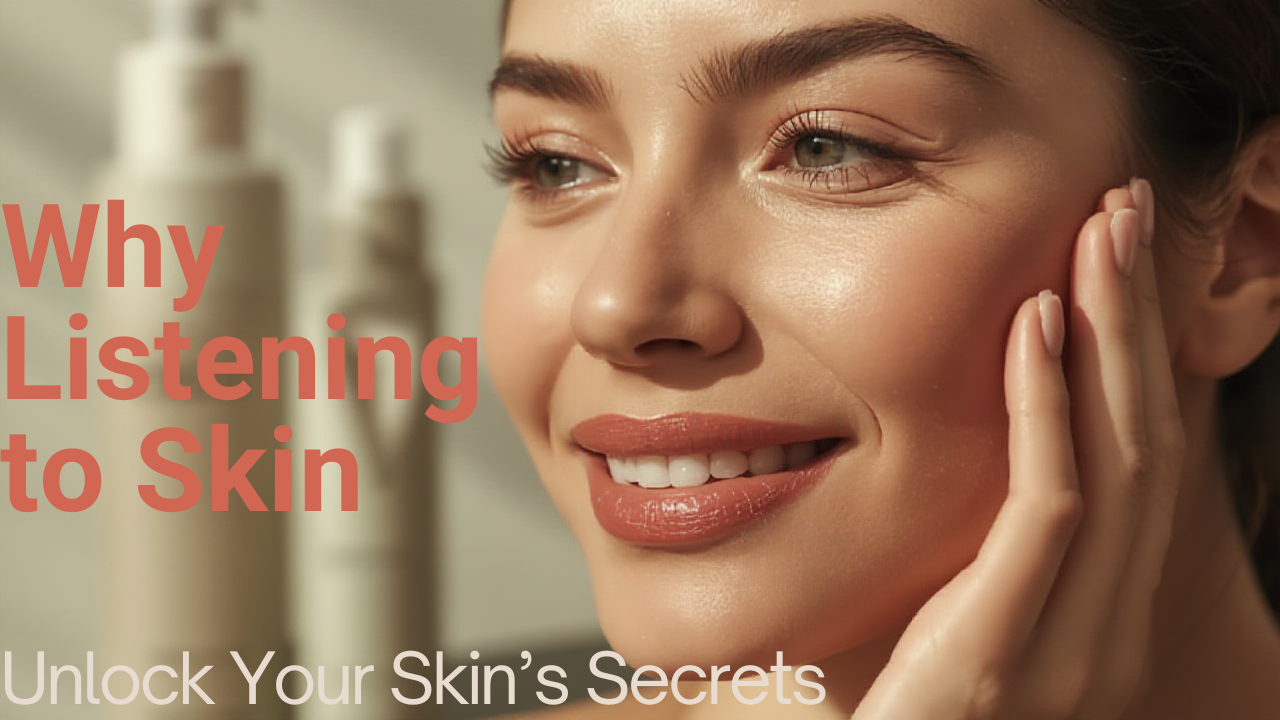

Most people don’t start out knowing how to listen to their skin.
At first, skincare often feels like following instructions—using what’s recommended, copying routines, trying to do things “the right way.” Skin is treated like something to manage or correct, rather than something that communicates.
But over time, many people notice that their skin is constantly giving feedback. It just doesn’t speak loudly or clearly at first. Learning to listen usually happens slowly, through repeated experiences and small moments of noticing.
And once people start listening, their relationship with skincare often changes in subtle but meaningful ways.
Skin Communicates Through Feeling Before Appearance
One of the first things people notice is that skin often speaks through sensation before it shows visible signs.
Tightness, warmth, itchiness, softness, comfort—these feelings usually appear before anything obvious shows up in the mirror.
Over time, people begin recognizing that:
- Skin can feel stressed even if it looks “fine”
- Comfort often matters more than instant visual changes
- Ignoring early sensations usually leads to louder signals later
This awareness shifts attention away from constant visual checking and toward how skin feels throughout the day.
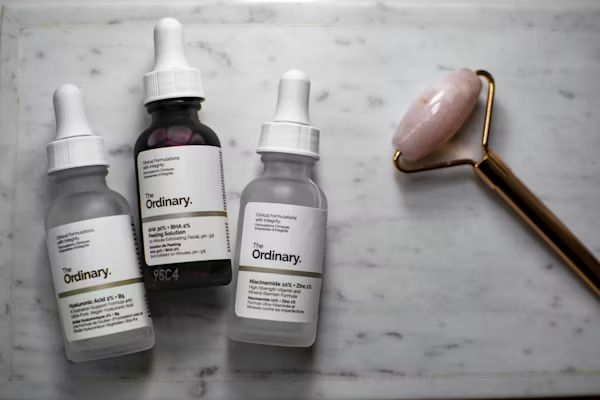
Reactions Become Easier to Understand When You Pay Attention
At first, skin reactions can feel random.
A breakout here. Dryness there. Sensitivity that seems to come out of nowhere.
But when people slow down and listen, patterns often become clearer. Not instantly—but gradually.
They start noticing connections between their skin and things like:
- Stress levels
- Sleep changes
- Weather shifts
- Routine changes
- Overuse or underuse of products
Listening doesn’t mean having all the answers. It just means recognizing that skin responses usually have context.
Listening Often Leads to Doing Less, Not More
This surprises many people.
When they stop trying to force outcomes and start paying attention, routines often simplify naturally.
People notice that when skin feels overwhelmed, reducing steps feels better. When skin feels comfortable, there’s less urge to change things.
Listening helps people recognize when the routine is supportive—and when it’s too much.
And that recognition builds trust over time.
Skin Feedback Changes With Life
Another thing people notice is that skin doesn’t give the same signals forever.
What skin asks for during a stressful period may feel different from what it asks for during a calm one. What works in summer may not feel right in winter.
Listening becomes an ongoing process rather than a one-time solution.
Instead of expecting consistency from skin, people begin allowing routines to shift gently with life.
Listening Reduces the Urge to Overcorrect
When people don’t listen to their skin, they often react strongly to small changes—adding products quickly, switching routines abruptly, or trying to “fix” things immediately.
But listening tends to soften that reaction.
People notice they become less reactive and more patient. They wait, observe, and let patterns unfold before changing everything.
That patience often makes skincare feel calmer and less stressful.
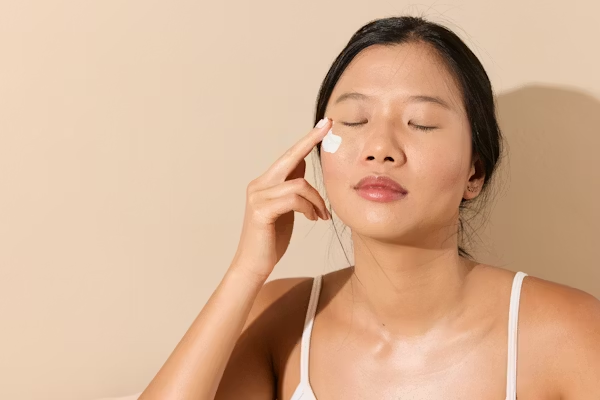
Comfort Becomes a Reliable Signal
Over time, many people realize that comfort is one of the most reliable forms of skin feedback.
When skin feels comfortable, routines feel easier to maintain. When it feels uncomfortable, something usually needs adjusting—even if the mirror doesn’t show it yet.
This doesn’t mean chasing constant comfort. It just means recognizing discomfort as information rather than failure.
Listening Builds a More Personal Routine
As people listen more closely, routines become less influenced by trends and more shaped by personal experience.
They begin choosing products and habits based on familiarity, comfort, and repeatability.
The routine starts reflecting their skin—not someone else’s idea of what it should look like.
And that personalization often makes skincare feel more grounded.
A Calm Takeaway People Often Reach
Listening to skin isn’t about perfect intuition or instant understanding.
It’s about paying attention over time.
Many people notice that when they treat skin as something that communicates rather than something to control, skincare becomes less stressful and more supportive.
And that shift—quiet and gradual—is often what makes care feel like care.
Ai Insights: Over time, many people notice that paying attention to how their skin feels throughout the day makes its patterns and sensitivities feel less random and more understandable.