
There’s a particular kind of relationship people develop with curly and textured hair—one that tends to be shaped more by experience than by rules.
Because curls and texture don’t behave the same way every day. Some mornings your hair feels perfectly defined and soft, and other mornings it has its own plans. Weather changes it. Sleep changes it. Stress changes it. Even the same products can feel different depending on how your hair is doing that week.
So over time, a lot of people stop trying to “control” curly hair and start learning how to work with it.
And when you listen to how people actually care for curly and textured hair in real life, you start hearing some consistent patterns—not rigid steps, but quiet habits that make the routine feel more manageable.
People Start With Moisture, Even When They Don’t Call It That
One of the most common shifts is that people begin prioritizing how their hair feels—especially softness and slip.
They might not describe it as “moisture,” but they’ll notice things like:
- Hair feels easier to detangle when it’s hydrated
- Curls look more defined when the hair doesn’t feel dry
- Frizz feels less intense when hair feels softer
- Styling feels smoother when hair has enough slip
Over time, many people start treating hydration like a baseline rather than an extra step.
Not because they’re following a rule—because they’ve felt the difference.
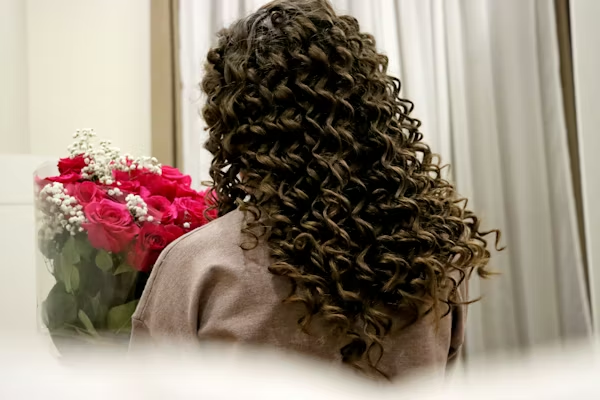
Wash Day Becomes a Whole Mood
For curly and textured hair, “wash day” often isn’t just washing. It’s a routine.
People tend to build wash days around what their hair needs and what their schedule can handle. That might mean:
- Taking more time to cleanse and condition thoroughly
- Detangling during conditioning instead of after
- Splitting the routine into steps so it doesn’t feel rushed
- Planning wash days around events, work weeks, or weekends
Over time, people often notice that wash day works best when it feels unhurried—even if the routine itself stays simple.
And it becomes less about doing everything and more about doing it in a way that feels patient.
Detangling Becomes Less of a Battle
A lot of people with curly and textured hair talk about detangling as one of the biggest points of stress—especially early on.
But over time, many people notice that detangling feels easier when it becomes more intentional.
They tend to find a rhythm that works for them:
- Detangling when hair has slip (usually with conditioner or a detangler)
- Working in sections instead of trying to do everything at once
- Taking a gentler approach when knots feel stubborn
- Being more mindful about how much hair they handle when it’s fragile
And often, the biggest change isn’t technique—it’s attitude.
People notice detangling goes better when they stop treating it like a fight.
Styling Becomes About “Setting” the Hair, Not Forcing It
A lot of curl care becomes easier when people think of styling as setting the hair up for the day rather than trying to make it behave.
Over time, people start paying attention to:
- How wet or damp their hair is when they apply products
- Whether they get better definition when they style in sections
- Which steps help curls clump and stay together
- How much manipulation makes hair frizzier
They often notice that curls respond best to a routine that feels consistent and gentle, rather than a routine that’s constantly changing.
The idea becomes: I’m helping my hair settle into its pattern.
Not: I’m trying to make it do something it doesn’t want to do.
People Keep a “Reset Routine” for When Hair Feels Off
Curly and textured hair can have weeks where nothing feels quite right. The curls feel undefined, the hair feels dry, or it just feels harder to style.
Over time, many people develop a reset routine—a small set of steps they return to when things feel off.
It might look like:
- A deeper conditioning moment
- A clarifying wash
- A simpler styling routine with fewer products
- Going back to basics instead of experimenting
The key thing people notice is that the reset routine gives them a sense of stability. It becomes a familiar way to return to baseline.
Frizz Starts Feeling Less Like a Problem and More Like a Signal
A really common long-term shift is how people relate to frizz.
In the beginning, frizz can feel like the enemy. People try to eliminate it completely.
But over time, many people notice frizz is often a signal:
- The hair might be dry
- The hair might be over-manipulated
- The weather might be affecting it
- The curls might be needing a refresh
Instead of treating frizz as something to “fix” at all costs, people start responding to it with curiosity.
And that usually makes the whole routine feel calmer.
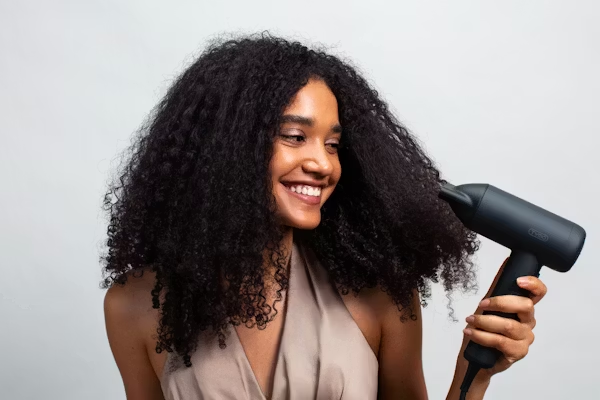
Refreshing Becomes Its Own Skill
A lot of curly and textured hair routines aren’t about “starting over” every day. They’re about refreshing.
Over time, people often get better at small refresh habits that extend their style:
- Lightly re-wetting sections instead of soaking everything
- Reapplying a small amount of product only where needed
- Reshaping curls gently rather than brushing everything out
- Adjusting style depending on how the hair feels
The refresh becomes a way of working with the hair as it changes, instead of trying to make every day look like wash day.
People Stop Comparing and Start Personalizing
One of the biggest shifts people describe is moving away from comparison.
Curly and textured hair varies so much—patterns, density, porosity, shrinkage, softness, styling preferences—and people eventually notice that what works for someone else may not feel right for them.
Over time, routines become more personal and less performative.
People start choosing routines based on:
- What feels manageable in their schedule
- What their hair seems to respond to
- What gives them comfort and consistency
- What makes them feel like themselves
And the routine starts fitting the person—not the other way around.
What Curly and Textured Hair Care Often Looks Like in Real Life
Most people don’t stick to a perfect routine. They stick to what’s repeatable.
In everyday life, curly and textured hair care often includes:
- A cleansing routine that doesn’t feel too harsh
- Conditioning that helps with softness and detangling
- Styling that “sets” the curls with minimal stress
- Refresh habits that extend the style
- Protective or low-manipulation days when needed
Not because it’s a strict method—but because it’s a routine that feels kind.
A Calm Takeaway People Often Learn Over Time
Curly and textured hair teaches a certain kind of patience.
Over time, many people notice that caring for their texture becomes less about chasing one perfect outcome and more about building a relationship with what their hair naturally does.
Some days are easy. Some days aren’t. The routine shifts with seasons, schedules, and life.
But the care that tends to last is the care that feels gentle, realistic, and repeatable—because it supports the hair and the person living with it.
Ai Insights: Over time, many people notice that caring for curly and textured hair becomes more about learning its patterns and keeping a few steady routines that make wash days and refresh days feel familiar.