
There’s a moment many people recognize.
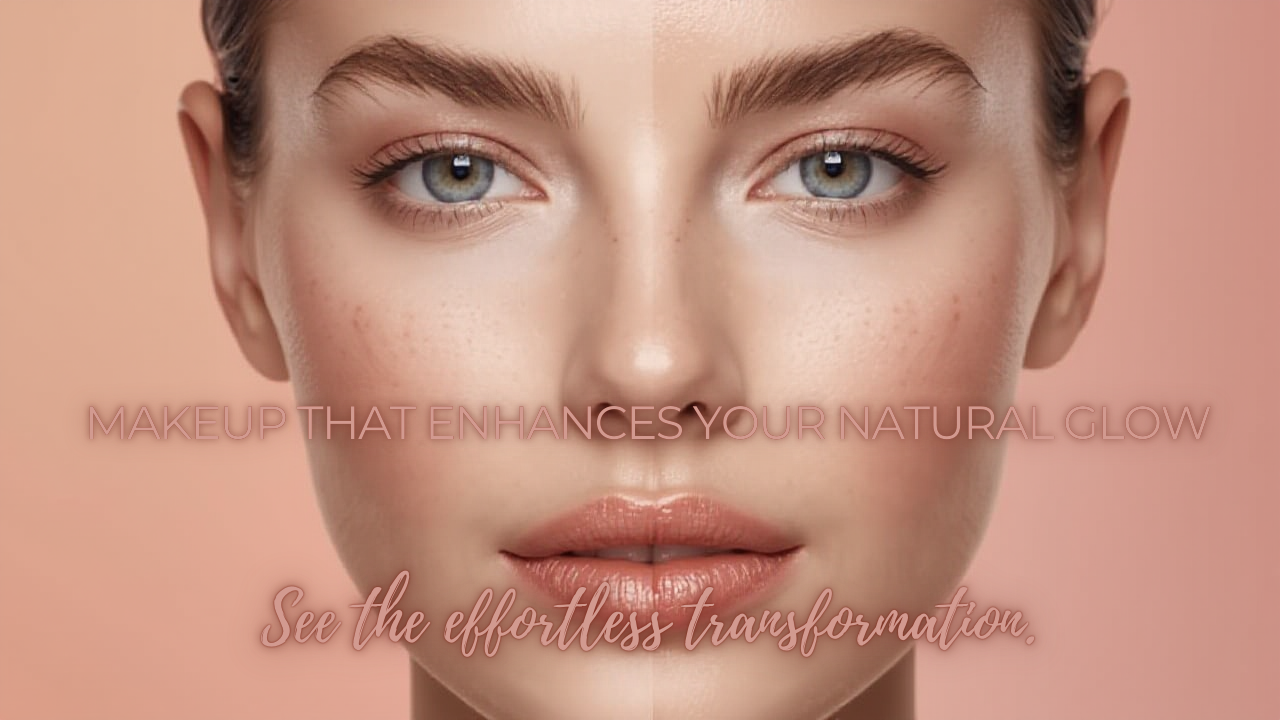
You apply makeup one day, and your skin looks smooth, even, almost softly blurred. Then you wash it off at night, look in the mirror, and notice your face looks… different. Not worse—just more real. More textured. More alive.
That contrast can feel surprising, especially if you’re paying close attention to your skin.
But it’s also completely normal.
Makeup changes the look of skin in natural ways because it’s designed to shape what we see: it reflects light differently, softens contrast, and adds an even layer over a surface that is naturally full of pores, movement, and texture.
If you’ve ever wondered how makeup changes the look of skin naturally, it helps to understand that makeup doesn’t just “cover.” It changes the way skin behaves visually.
Skin has texture—makeup changes how we notice it
Skin isn’t flat.
It has pores, fine lines, tiny hairs, natural oil, dry patches, and movement. Even very healthy skin has texture because texture is part of being human.
Makeup can shift how noticeable that texture is because it changes:
- how light reflects off the surface
- how shadows form around pores and lines
- How contrast appears on the skin
- How does the overall tone looks
That’s why bare skin can look more textured under certain lighting, while makeup can appear smoother—even if your skin hasn’t changed at all.

Makeup makes skin look more “even” by reducing contrast
One of the most natural things makeup does is reduce contrast.
Your bare skin has small variations:
- slight redness around the nose
- a darker area under the eyes
- tiny spots or uneven tone
- more pigment in certain areas
- natural warmth or flush
These changes are normal, but they create contrast—meaning your eye notices differences across the face.
Foundation, concealer, and tinted products soften that contrast by blending tone into a more unified surface.
When contrast decreases, skin often looks smoother—even if the texture is still there.
That’s one of the reasons makeup changes the look of skin so quickly: it changes what your eyes detect first.
Makeup changes light reflection (and that changes everything)
Skin appearance is deeply tied to light.
Makeup changes the way skin reflects light in multiple ways:
- matte formulas reduce shine and minimize reflective highlights
- luminous formulas create a smoother glow that can soften shadows
- powders can blur and diffuse light across the surface
- primers can fill and soften how pores catch light
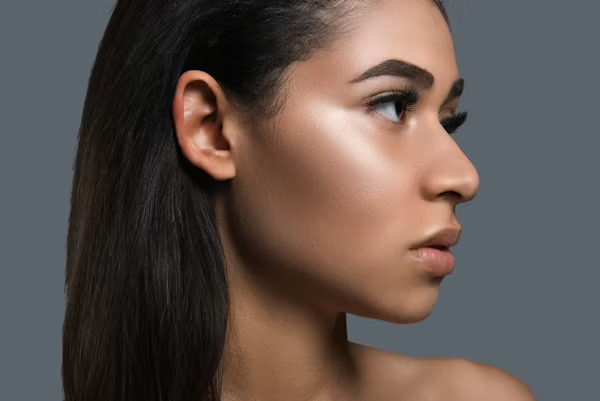
Even without heavy coverage, makeup can shift the way your face looks simply by altering reflection.
That’s why makeup can make pores look smaller or lines look softer: it’s often not “erasing” anything—it’s changing the way the surface catches light.
Makeup can create a “blur effect” through texture itself
Some makeup products have a texture designed to sit on top of skin in a smoothing way.
This is why certain products feel silky or velvety. They create a layer that visually smooths by:
- softening how pores look
- reducing the appearance of unevenness
- creating a more uniform finish
It’s similar to how a filter works, but in a very real, physical way. The product texture diffuses what the skin looks like on camera and in real life.
That’s also why makeup can sometimes make texture look more noticeable if the finish doesn’t match your skin’s needs (like heavy powder over dryness). The layer itself becomes visible.
So makeup doesn’t always “hide” texture—it reshapes how texture shows up.
Makeup changes your “baseline” for what skin looks like
One of the biggest things people notice over time isn’t just the physical effect of makeup—it’s the mental comparison.
If you wear makeup regularly, your brain begins to treat that look as your normal.
So when you see your bare face, it can feel like something is missing—even if nothing is wrong.
People often notice:
- pores feel more noticeable without makeup
- tone looks less even
- the face looks “less polished”
- texture feels more obvious in certain light
But that’s often because you’re comparing two different presentations of the same skin.
Makeup doesn’t change what your skin is. It changes what it looks like.
And the brain adjusts quickly to the version it sees most often.
Makeup can change how skin feels, not just how it looks
Makeup also changes skin experience.
Depending on formula, it can:
- absorb oil
- add moisture
- feel drying
- feel smoothing
- feel heavy or light
- settle into fine lines
- cling to dry patches
So makeup can influence how you interpret your skin throughout the day. Some people feel more confident and “finished” with makeup, while others feel more comfortable without it.
Over time, people tend to notice that makeup isn’t just aesthetic—it shapes the way you feel in your skin.
Skin + makeup looks different depending on the day
One of the most normal things about makeup is that it doesn’t look the same every day.
Even with the same products, makeup can change based on:
- how hydrated your skin feels
- how much oil you have that day
- weather and humidity
- what skincare you used underneath
- whether you slept well
- how much you touched your face
- whether you used powder or setting spray
That’s why someone can feel like their makeup looks amazing one day and “off” the next.
It’s not because their face changed dramatically—it’s because skin is always shifting slightly, and makeup responds to that surface.
Makeup often highlights whatever your skin is doing
This is a truth people notice over time: makeup tends to emphasize the current state of your skin.
If skin feels:
- hydrated → makeup often looks smoother
- dry → makeup may cling or look textured
- oily → makeup may shift or break down
- calm → makeup looks even
- irritated → makeup might sit less comfortably
Makeup doesn’t exist separately from your skin. It’s interacting with it.
That’s why makeup can feel like a mirror—not just a mask. It reflects what your skin is like underneath, even when coverage is strong.
A calm takeaway to end on
Makeup changes the look of skin naturally because it changes how we see skin.
It softens contrast, shifts light, smooths the appearance of texture, and creates a more even finish. It can make skin look blurred or glowing, or sometimes make texture stand out more depending on the formula and the day.
But none of that means your bare skin is wrong.
It just means bare skin and makeup skin are two different versions of the same face—and it’s normal for them to look different.
Because skin is real.
And makeup is designed to reshape how that reality appears, softly and temporarily, in whatever way feels good to you.
Ai Insights: Over time, many people notice that makeup often changes how they perceive their skin by softening contrast and light, making natural texture feel more noticeable only when it’s removed.