

It often begins in a very ordinary way.
Someone is standing at the sink late at night, half-asleep, staring at a lineup of bottles that used to feel exciting—and now just feels like… a lot. Or maybe it’s the morning, and they’re already rushing, and their routine feels less like self-care and more like a checklist they can’t keep up with.
That’s usually the moment people start craving something calmer.
Not necessarily fewer products for the sake of minimalism. Not because they’ve “given up.” But because they want a routine that feels easy to live with—something that doesn’t demand constant decisions, constant adjustments, constant worry.
If you’ve ever wondered how people build calm skincare routines, the answer is often simpler than it sounds: they build them slowly, intentionally, and in a way that fits the kind of life they actually have.
Calm routines start with a different goal
A lot of skincare routines are built around urgency.
Fix this.
Clear that.
Change something.
Do more.
Calm skincare routines tend to start with a different goal: comfort.
People often build calm routines when they begin prioritizing how their skin feels day to day, not just how it looks in a perfect light. They want their routine to feel steady, not intense.
That mindset shift changes everything.
Instead of chasing a dramatic result, they start asking:
- “What feels supportive right now?”
- “What can I do consistently?”
- “What feels gentle enough to repeat tomorrow?”
And those questions naturally lead to a calmer routine.
Step one is usually simplifying what’s already there
Most people don’t build a calm routine from scratch. They start by looking at what they’re already doing and noticing what feels stressful.
Sometimes it’s:
- too many steps
- too many actives
- too many “rules”
- too many products they don’t even enjoy using
So the first quiet step is often subtraction.
Not in a harsh, throw-everything-away way—but in a thoughtful way, like:
- “What do I actually look forward to using?”
- “What makes my skin feel comfortable?”
- “What feels like extra effort without extra ease?”
Over time, many people realize that calm skincare routines are built by keeping what feels grounding and letting the rest fade out naturally.
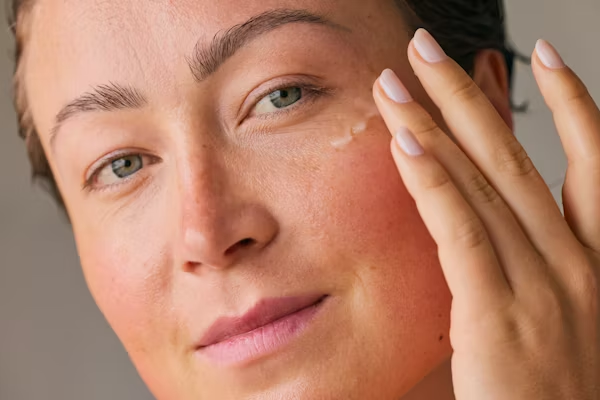
Calm routines usually have a “core” that stays the same
One thing you’ll notice when you look at people with calm skincare routines is that they often have a small, steady core.
It might be:
- a gentle cleanser they trust
- a moisturizer they reach for without thinking
- one or two simple steps that make them feel put-together
The core doesn’t change every week. That’s part of what makes it calm.
Even when people experiment with new products, the calm routine still has a backbone—something familiar to return to when life gets busy or skin feels unpredictable.
That core creates stability, and stability is what calm routines are made of.
People build calm routines by paying attention to “how it fits,” not just what it does
It’s easy to choose products based on hype or trends. But calm routines are usually built around fit.
Fit looks like:
- textures that feel pleasant
- steps that don’t take too long
- a routine that works on tired nights
- products that don’t require perfect timing
- skincare that feels soothing rather than demanding
People often notice that when a product fits their lifestyle, they use it more consistently—and consistency tends to feel calming all on its own.
A calm routine isn’t just about what’s on your face. It’s about what’s sustainable in your day.
Calm routines often focus on fewer “high-effort” steps
When a routine feels chaotic, it’s often because it includes steps that require constant attention.
For example:
- rotating multiple actives
- changing products based on daily skin mood
- layering too many textures
- doing complex routines even when you’re exhausted
Calm skincare routines usually reduce those high-effort steps.
That doesn’t mean they’re boring. It just means they’re easier to repeat.
People tend to build calm routines when they choose steps that feel supportive without needing constant management. They want a routine that feels like a steady background habit—not a nightly project.
Many calm routines include a “reset night”
One of the most underrated habits people build into calm skincare routines is what you could call a reset night.
A night where you do the simplest version of your routine—something you know will feel good no matter what.
For some people, that looks like:
- cleanser + moisturizer only
- a gentle cleanse and an extra layer of hydration
- skipping anything complicated
- focusing on comfort
Reset nights do something important: they remind you that your routine doesn’t have to be perfect to be helpful.
And over time, that creates a calmer relationship with skincare overall.
Because you’re not always asking your routine to perform. Sometimes you’re just letting it be a soft landing.
Calm routines grow when people stop reacting to every small change
Skin changes constantly. It responds to weather, stress, sleep, travel, makeup, hormones, and so many other things.
A lot of routine stress comes from reacting too quickly to every small shift:
- “My skin looks dry today—I need a new product.”
- “My pores look bigger today—time to exfoliate.”
- “This feels different—something must be wrong.”
Calm skincare routines tend to form when people begin observing instead of reacting.
They give their skin time to settle. They notice patterns instead of panicking over moments.
Over time, many people realize that calm routines are built with patience—not because patience is glamorous, but because it’s calmer.
People build calm routines by making it feel like a ritual, not a task
One of the quiet reasons calm skincare routines feel so good is that they become a ritual.
Not an elaborate spa moment—just a small, grounding pause.
People often build calm routines when they:
- slow down while cleansing
- apply moisturizer like they’re caring for their skin, not correcting it
- treat the routine as a transition between “day” and “night”
- let skincare be a moment to check in with themselves
The steps might be the same, but the energy is different.
A calm routine doesn’t rush you. It settles you.
And when your skincare routine becomes a ritual, it often becomes easier to keep.
Calm routines are built with flexibility (not rigidity)
A calm routine isn’t strict. It doesn’t punish you for missing a night. It doesn’t fall apart if you don’t do every step.
That flexibility is part of what makes it calm.
Many people build calm skincare routines by creating an “easy version” and a “full version” of their routine, depending on the day.
For example:
The easy version
- cleanse
- moisturize
The full version
- cleanse
- one extra step (like hydration)
- moisturize
Having that built-in flexibility makes the routine feel supportive instead of controlling.
And that’s often how calm routines last.

What calm skincare routines look like over time
When people stick with a calm routine, they often describe changes in ways that sound… peaceful.
They say things like:
- “I don’t think about my skin as much.”
- “It feels easier to manage.”
- “My routine feels simple.”
- “I don’t feel like I’m constantly fixing something.”
- “I know what works for me.”
The routine becomes less about chasing perfection and more about feeling steady.
And that’s usually the real win: calm routines make skincare feel like part of life, not something you’re always trying to solve.
A calm takeaway to end on
If you’ve been wondering how people build calm skincare routines, the answer is often surprisingly gentle.
They build them by:
- keeping a small core that feels reliable
- choosing products that fit their real life
- simplifying what feels stressful
- letting routines be flexible
- and giving their skin room to be normal
A calm skincare routine isn’t something you “master.” It’s something you return to.
And over time, that return—the steady, kind repetition—often becomes the most comforting part.
Ai Insights: Over time, many people notice that skincare feels calmer and more sustainable when their routine has a small, familiar core they can return to without overthinking.